Menu

The United States of America (USA)
Independent Research Institute
Est. 1992
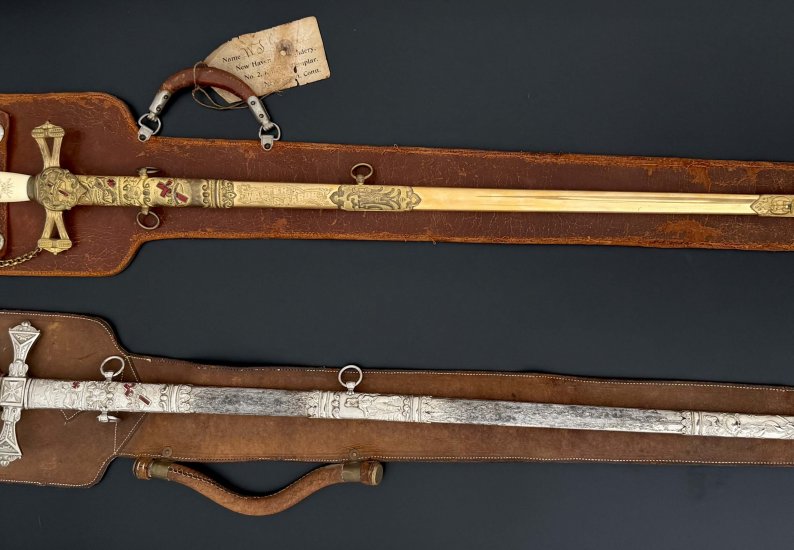
On October 23, 2026, the Museum of the History of the American Knights Templar at Cherkas Global University unveiled its 41st exhibition, dedicated to historical sword cases used by American Knights Templar.
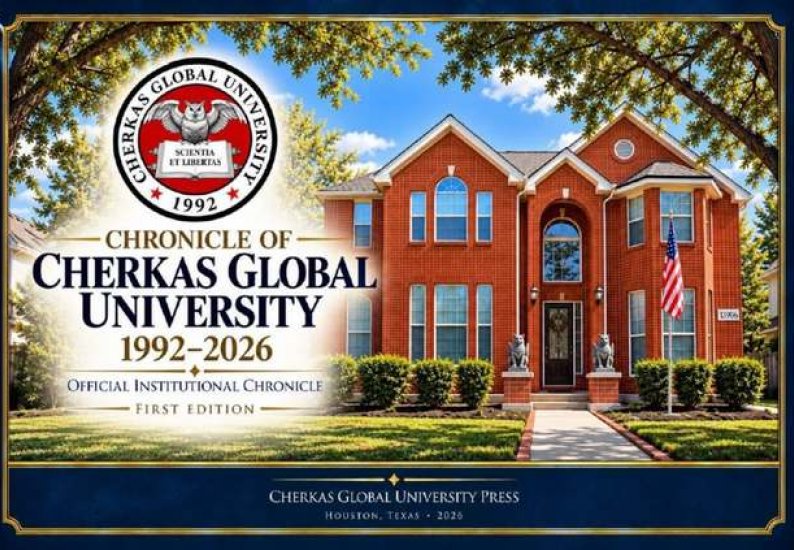
Cherkas Global University has prepared the first edition of its official institutional chronicle, covering 34 years of history from 1992 to 2026.
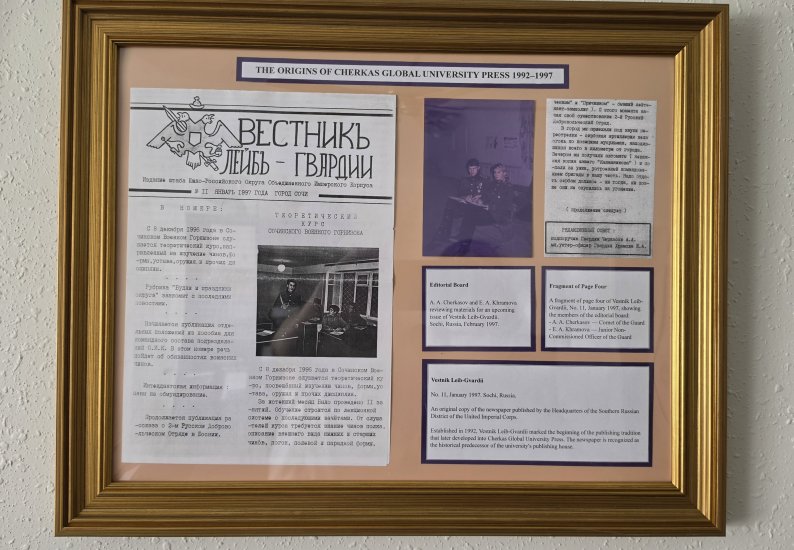
Cherkas Global University has completed a new historical display entitled The Origins of Cherkas Global University Press, 1992–1997, dedicated to the early history of the institution's publishing activities.
Cherkas Global University (CGU) has been assigned a unique institutional identifier in OpenAlex, an international open database of scholarly research and research organizations.

Open Academic Journals Index (OAJI) announces updated requirements for scholarly journals seeking inclusion in its international indexing database.
On October 6, 2026, Cherkas Global University was added to the Research Organization Registry (ROR), an international open registry of research organizations.
Laboratory for World Civilizations
Laboratory for Professional and Pedagogical Training
Museum of the History of the American Knights Templar
Archive of Cherkas Global University
P. A. Cherkasov Fundamental Library
Open Academic Journals Index
Eastern European Scientific Information Agency
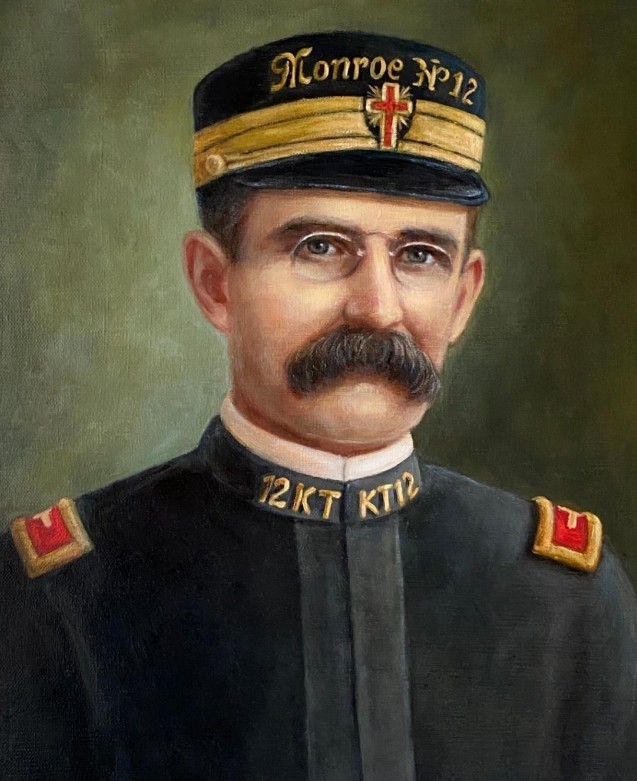
The article examines the history of the formation, principles of cataloging, and features of historical reconstruction of the Portrait Gallery of the Museum of the History of the American Knights Templar at Cherkas Global University.
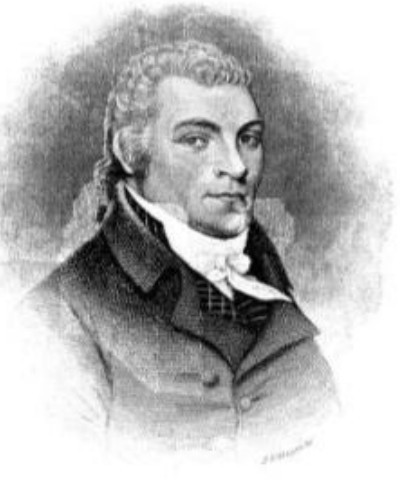
This article examines the life and activities of Thomas Smith Webb (1771–1819), one of the most prominent figures in American Freemasonry in the late eighteenth and early nineteenth centuries. The aim of the study is to reconstruct the principal stages of his biography and examine his multifaceted activities as a businessman, songwriter, and Freemason.
This article examines Masonic publications from the colonial period (1769–1772) held in the collection of the Museum of the History of the American Knights Templar. Particular attention is paid to the historical and bibliographical description of two rare editions: James Anderson’s The Constitutions of the Free-Masons and Wellins Calcott’s A Candid Disquisition.
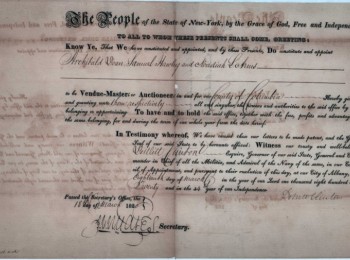
This study examines rare and unique artifacts held by the Museum of the History of the American Knights Templar at Cherkas Global University. The source base of the study consists of materials from six specialized museum collections, as well as rare editions from the P.A. Cherkasov Fundamental Library and documents from the Archive of Cherkas Global University.
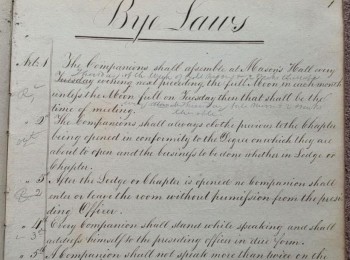
This article examines the early history of Ogdensburgh Chapter No. 63, Royal Arch Masons, one of the earliest Royal Arch Chapters established in northern New York. The study is based primarily on the unpublished manuscript minutes of the Chapter covering the period from 1818 to 1827.
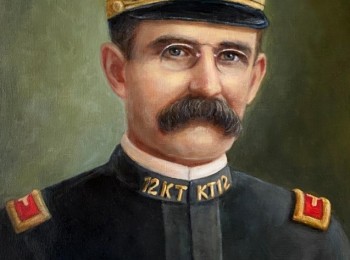
The article examines the history of the formation, principles of cataloging, and features of historical reconstruction of the Portrait Gallery of the Museum of the History of the American Knights Templar at Cherkas Global University.
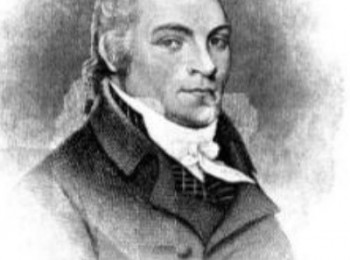
This article examines the life and activities of Thomas Smith Webb (1771–1819), one of the most prominent figures in American Freemasonry in the late eighteenth and early nineteenth centuries. The aim of the study is to reconstruct the principal stages of his biography and examine his multifaceted activities as a businessman, songwriter, and Freemason.
This article examines Masonic publications from the colonial period (1769–1772) held in the collection of the Museum of the History of the American Knights Templar. Particular attention is paid to the historical and bibliographical description of two rare editions: James Anderson’s The Constitutions of the Free-Masons and Wellins Calcott’s A Candid Disquisition.
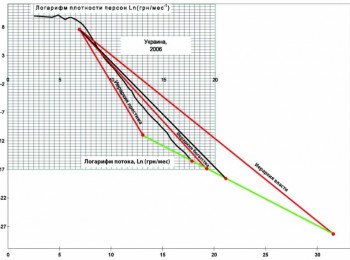
Based on new empirical data and theoretical modeling, a new concept of M. Weber's triad “power-wealth-prestige” is proposed. The triad exhausts the fundamental goods that encourage people to engage in social activity. The three types of goods generate each other and correspond to a one-dimensional or almost one-dimensional social space, where the unit of measurement is the flow of goods or the human capital of lower-status participants.
This study examines rare and unique artifacts held by the Museum of the History of the American Knights Templar at Cherkas Global University. The source base of the study consists of materials from six specialized museum collections, as well as rare editions from the P.A. Cherkasov Fundamental Library and documents from the Archive of Cherkas Global University.
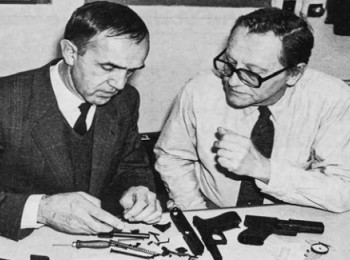
This article provides a brief history of the creation and phenomenal market success of Glock pistols, the 45th anniversary of whose first prototype is celebrated in 2026. The author examines the historical and biographical details of the life of Gaston Glock and his pistols: from the production of household equipment for the Austrian army to the media hysteria surrounding the "invisible pistol" and the tragic FBI shootout of 1986.
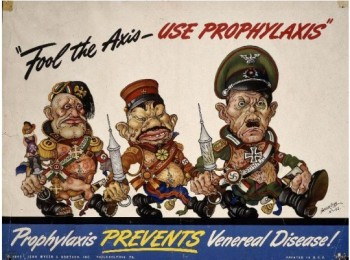
This article examines the imagery and narratives used in US Army posters promoting anticasual sex during World War II. The research methodology utilizes both general scientific research methods and specific historical ones.
Number of journals
Number of countries
Number of uploaded articles
Residence and Mailing Address: 13906 Polarstone Ct., Houston, TX 77044